Lime Rendering Services
Breathable, beautiful and enduring lime render for properties across Cardiff and South Wales
What Is Lime Rendering?
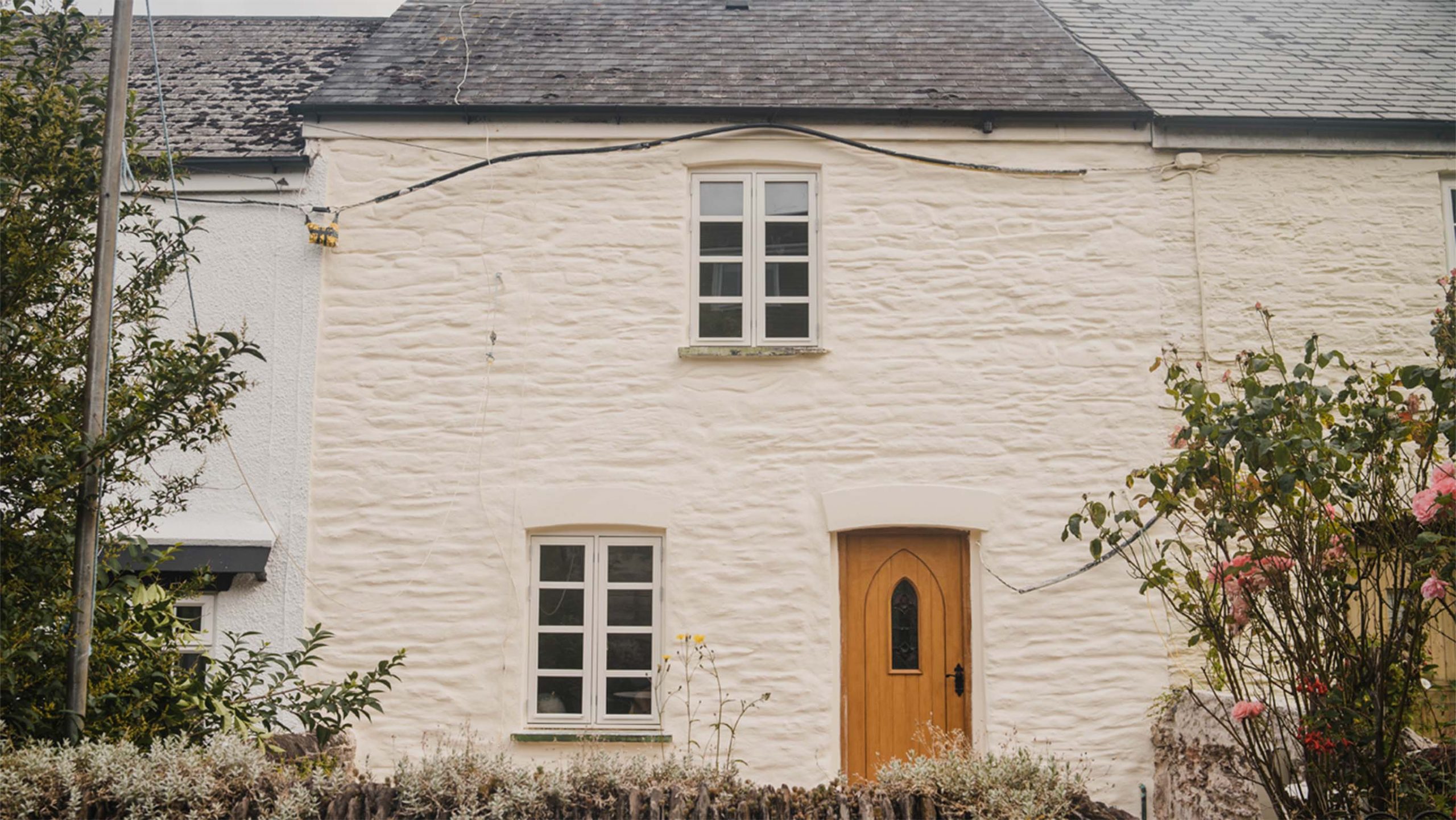
Lime rendering is the application of a lime-based mortar to external walls to provide a durable, weatherproof and breathable protective coating. Unlike modern cement renders that create a rigid, impermeable barrier, lime render works sympathetically with the building fabric, flexing with natural structural movement and allowing moisture vapour to pass through the wall harmlessly. This characteristic, known as breathability or vapour permeability, is essential for the long-term health of traditionally constructed buildings, including those built with stone, solid brick, cob, timber frame and rubble-filled walls.
At Lime Rendering, we specialise exclusively in lime-based external renders. We use Natural Hydraulic Lime (NHL) from trusted suppliers such as St Astier, Singleton Birch and Ty-Mawr Lime, combined with carefully graded local and imported aggregates, to produce render mixes that are tailored to the specific requirements of each building and its environment.
Why Choose Lime Render Over Cement Render?
Cement-based renders have been widely used since the mid-twentieth century, but they are fundamentally incompatible with traditionally built properties. Cement render is significantly harder and more rigid than lime render, which means it cannot accommodate the natural movement that older buildings experience due to thermal expansion, moisture changes and settlement. Over time, this rigidity causes cracking, which allows water to penetrate behind the render. Once trapped, this moisture cannot escape through the impermeable cement, leading to dampness, timber decay, frost damage and deterioration of the underlying masonry.
Lime render avoids all of these problems. Its inherent flexibility allows it to move with the building without cracking, and its vapour permeability ensures that any moisture that does enter the wall can evaporate outwards naturally. This is why lime render is recommended by conservation bodies such as Cadw, Historic England and the Society for the Protection of Ancient Buildings (SPAB) for use on heritage and traditionally constructed buildings.
Our Lime Rendering Process
Every lime rendering project we undertake follows a carefully planned process to ensure the highest quality results. Our process begins with a thorough site survey, during which we assess the condition of the existing walls, identify any structural or dampness issues, and determine the most appropriate lime render specification for the building.
Preparation
Proper preparation is critical to the success of any lime rendering project. We begin by carefully removing any existing failed render, usually cement-based, taking care not to damage the underlying masonry. We then rake out defective mortar joints and carry out any necessary repairs to the wall substrate, including repointing with lime mortar and replacing any damaged stones or bricks. The wall is then thoroughly dampened to ensure good suction and adhesion for the lime render.
Application
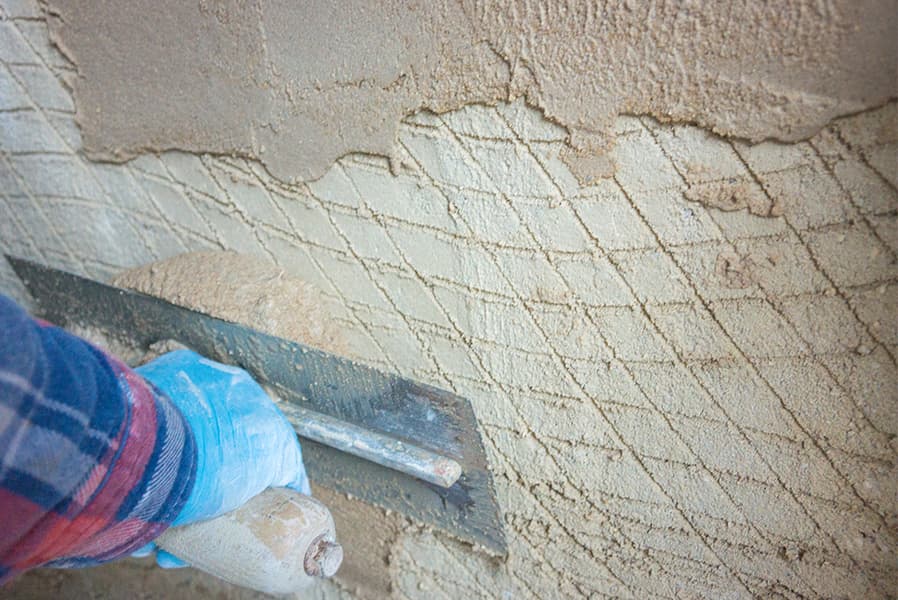
Lime render is applied in multiple coats, typically two or three depending on the specification. The first coat, known as the scratch coat or dubbing-out coat, is applied to a thickness of approximately 10-12mm and keyed to provide a mechanical bond for subsequent coats. This coat is allowed to cure for a minimum of three to five days before the second coat is applied. The final coat is applied to a thickness of approximately 6-8mm and can be finished in a variety of textures.
Curing and Aftercare
Lime render requires careful curing to achieve its full strength and durability. Unlike cement, which sets through a chemical reaction with water, lime render cures primarily through carbonation, absorbing carbon dioxide from the atmosphere and gradually converting back to calcium carbonate. This process takes several weeks and requires the render to be protected from excessive sun, wind and rain during the initial curing period. We provide comprehensive aftercare guidance to all our clients.
Types of Lime Render We Use
We work with a range of lime-based render products, each suited to different applications and building types. Our most commonly used renders include Natural Hydraulic Lime (NHL) renders in grades 2, 3.5 and 5, which offer varying degrees of hydraulic set and are suitable for a wide range of exposures and substrates. For heritage projects, we also use non-hydraulic lime (lime putty) renders, which cure solely through carbonation and are the most vapour-permeable and flexible option available.
We also offer coloured lime renders using natural earth pigments, as well as lime washes and shelter coats for a more traditional finish. Whatever the specification, we use only the highest quality materials from reputable suppliers, ensuring that every job we complete is built to last.

Contact Us
For expert lime rendering services in Cardiff, Newport, Swansea, Bristol, Bath and across South Wales, contact Lime Rendering today. We offer free surveys and quotations. Call 07762 105 340 or email info@limerendering.com.
Ready to Transform Your Property?
Contact us today for a free, no-obligation survey and quotation.
Get Your Free QuoteOr call 07762 105 340